
Gold has held a special place in Indian households for generations. It’s not just an investment — it’s tradition, security, and emotional value all rolled into one shiny asset. But the way people buy and hold gold has changed dramatically over the last decade. Where earlier generations only had the option of buying coins, bars, or jewellery from a local jeweller, today’s investors can buy gold with a few taps on a mobile app.
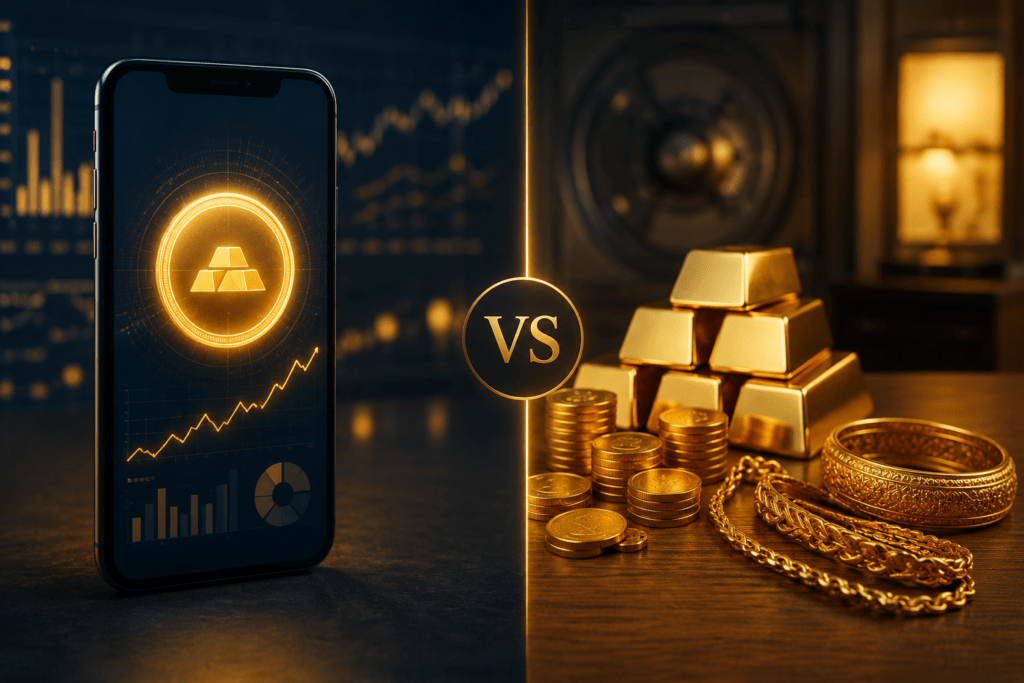
This has created a genuine dilemma for beginners: should you invest in digital gold or stick with the tried-and-tested physical gold? Both have their strengths and weaknesses, and the right choice depends on your goals, risk appetite, and how you plan to use the gold in the future. In this guide, we’ll break down both options in detail and give you practical tips to make a smart, well-informed decision.
Understanding Physical Gold
Physical gold refers to gold you can literally hold in your hand — coins, bars, biscuits, or jewellery. This has been the traditional way of investing in gold across India for centuries.
Advantages of Physical Gold
1. Tangible Asset There’s a certain psychological comfort in owning something you can touch, store, and pass down to the next generation. For many families, gold jewellery is not just an investment but an heirloom.
2. No Digital Dependency You don’t need an internet connection, an app, or a demat account to access or use physical gold. It exists independently of any platform or technology.
3. Usable for Personal Occasions Physical gold in the form of jewellery can be worn during weddings, festivals, and religious ceremonies — something digital gold simply cannot offer.
4. Universally Accepted Physical gold can be sold, pledged, or exchanged almost anywhere in India, whether at a local jeweller or a bank offering gold loans.
Disadvantages of Physical Gold
1. Making Charges and Wastage When you buy gold jewellery, you pay making charges (usually 8–25% of the gold value) and sometimes “wastage” charges, which don’t add to your investment value at all.
2. Storage and Security Concerns Keeping physical gold at home comes with theft risk. Many people end up paying for bank lockers, which adds a recurring cost to the investment.
3. Purity Issues Not all jewellers are transparent about purity. Even with hallmarking, there have been cases of discrepancies, and beginners may find it hard to verify gold quality on their own.
4. Lower Resale Value When you sell old jewellery, jewellers often deduct making charges and offer a lower rate than the prevailing market price, reducing your effective returns.
Understanding Digital Gold
Digital gold is a relatively new investment method that allows you to buy gold online in fractional amounts, starting from as little as ₹1. The gold you purchase is stored in insured vaults by the seller (usually a fintech platform or bank), and you own a certificate confirming your ownership.
Advantages of Digital Gold
1. Low Minimum Investment Unlike physical gold, where you often need to buy at least one gram, digital gold lets you start investing with a tiny amount. This makes it accessible to students and first-time investors.
2. No Storage Hassles Since the gold is stored securely in insured vaults by the provider, you don’t have to worry about theft, storage space, or locker charges.
3. High Liquidity Digital gold can be bought or sold instantly through an app, often 24/7, without needing to visit a store or negotiate a price.
4. Transparent Pricing Prices are usually linked directly to live market rates, so you know exactly what you’re paying for, with minimal hidden charges compared to jewellery purchases.
5. Easy to Convert Many platforms allow you to convert digital gold into physical coins or bars after a certain threshold, giving you flexibility.
Disadvantages of Digital Gold
1. Lack of Regulation As of now, digital gold isn’t directly regulated by SEBI or RBI in India, which means investors rely on the credibility of the platform offering it. This is a genuine risk beginners should be aware of.
2. Storage Duration Limits Some platforms only allow you to hold digital gold for a limited period (often 5 years), after which you must either take physical delivery or sell it.
3. No Emotional or Cultural Use You can’t wear digital gold to a wedding. For those who value gold’s cultural and sentimental role, digital gold doesn’t fulfill that purpose.
4. GST and Spread Costs While digital gold avoids making charges, it usually comes with GST (3%) and a buy-sell spread, which can eat into short-term returns.
Digital Gold vs Physical Gold: Quick Comparison
| Factor | Digital Gold | Physical Gold |
|---|---|---|
| Minimum Investment | As low as ₹1 | Usually 1 gram or more |
| Storage | Handled by provider | Self-storage or locker |
| Liquidity | High, instant | Depends on jeweller |
| Purity Assurance | Generally 24K, certified | Varies, hallmark needed |
| Regulation | Not fully regulated | More established market |
| Cultural Use | Not usable | Wearable, giftable |
| Making Charges | None | 8–25% typically |
Alternative Ways to Invest in Gold
Beyond digital and physical gold, beginners should also know about two other popular options:
Gold ETFs (Exchange Traded Funds): These are traded on stock exchanges like shares and are regulated by SEBI, offering more transparency and security than digital gold, along with easy liquidity.
Sovereign Gold Bonds (SGBs): Issued by the Reserve Bank of India, these come with an added interest rate (usually 2.5% annually) on top of gold price appreciation, and offer tax benefits if held until maturity.
If your main goal is pure investment rather than personal use, gold ETFs and SGBs are often considered safer and more efficient than digital gold, since they carry proper regulatory oversight.
Tips for Beginners Investing in Gold
1. Define Your Purpose First
Ask yourself: are you investing for long-term wealth building, for a future wedding, or simply to diversify your portfolio? Your purpose will guide whether digital or physical gold suits you better.
2. Start Small
If you’re new to gold investing, don’t put a large sum in at once. Digital gold is ideal here since you can start with small, regular amounts and build up over time — similar to a SIP approach.
3. Verify the Platform’s Credibility
Since digital gold isn’t fully regulated, only invest through well-known, trusted platforms with proper insurance backing for their vaults and a transparent buyback policy.
4. Check Purity Certification
For physical gold, always insist on BIS hallmarked jewellery or coins. This ensures you’re getting the purity you’re paying for.
5. Compare Total Costs
Don’t just look at the gold price — factor in making charges, GST, storage costs, and spreads before deciding which route is more economical for your situation.
6. Diversify Across Formats
You don’t have to choose just one. Many smart investors keep some physical gold for cultural needs and combine it with digital gold, ETFs, or SGBs for pure investment purposes.
7. Track Gold Price Trends
Gold prices fluctuate based on global economic conditions, inflation, and currency movements. Keeping an eye on trends helps you time your purchases better.
8. Avoid Impulse Buying During Festivals
Prices often spike during Akshaya Tritiya, Dhanteras, and wedding seasons due to high demand. If your goal is investment rather than gifting, buying during regular periods can be more cost-effective.
9. Understand Tax Implications
Physical gold held for over three years qualifies for long-term capital gains tax with indexation benefits. Digital gold is generally taxed similarly, so understanding these rules helps you plan your exit strategy.
10. Keep Documentation Safe
Whether it’s a digital gold certificate or a physical gold purchase invoice, always keep proof of purchase. This is essential for insurance claims, resale, and tax filing.
Which One Should Beginners Choose?
For someone just starting their investment journey, digital gold offers a low-cost, hassle-free entry point to build the habit of investing regularly. It’s especially useful for younger investors who prioritize convenience and don’t need gold for cultural or ceremonial purposes right away.
However, if you value the tangible, cultural, and long-term security aspect of gold — especially for occasions like weddings — physical gold remains irreplaceable, despite the extra costs involved.
A balanced approach often works best: use digital gold or SGBs for your core investment strategy, and buy physical gold only when you have a specific personal need, such as a family function or festival gift.
Conclusion
Both digital and physical gold have their own place in a well-rounded investment portfolio. Digital gold wins on convenience, low entry cost, and liquidity, making it a great starting point for beginners. Physical gold, on the other hand, carries emotional and cultural value that no digital asset can replace.
The smartest approach isn’t necessarily choosing one over the other — it’s understanding your financial goals and blending both formats strategically. Start small, stay informed, verify platform credibility, and always keep an eye on total costs before making any gold investment decision.
Gold has stood the test of time as a reliable store of value, and with the right strategy, both digital and physical formats can help you build long-term wealth safely.
Disclaimer: This article is for informational purposes only and does not constitute financial advice. Please consult a certified financial advisor before making investment decisions.