
If you’ve ever opened your jewelry box and found old rings, broken chains, or gold pieces you no longer wear, you already own something valuable. Gold holds its worth even when styles change or pieces get damaged, which makes it one of the easiest assets to turn into quick cash. But if this is your first time selling gold, the process can feel confusing. How do you know what your gold is worth? Who do you sell it to? How do you avoid getting scammed?
This beginner’s guide walks you through everything step by step, so you can sell your gold confidently and get a fair price — fast.
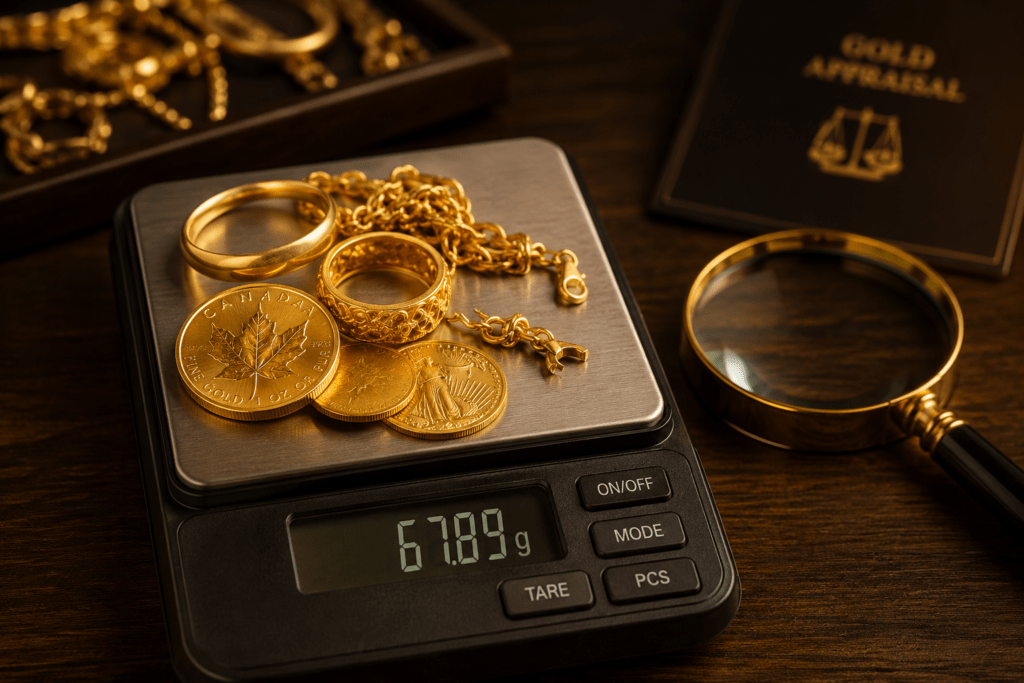
Why People Sell Gold
Before diving into the “how,” it helps to understand the “why.” People sell gold for many reasons:
- Unexpected expenses – medical bills, rent, or emergency repairs
- Decluttering – old jewelry that’s broken, outdated, or simply unused
- Debt repayment – using gold value instead of taking a loan
- Inherited items – gold passed down that doesn’t match personal style
- Investment cash-out – selling gold coins or bars when prices are high
Whatever your reason, the goal is the same: get the most cash, safely and quickly.
Step 1: Identify What Type of Gold You Have
Not all gold is the same, and understanding what you own is the first step toward getting a fair price.
Common types of gold items:
- Jewelry – rings, necklaces, bracelets, earrings
- Coins – bullion coins, commemorative coins, old currency
- Bars or bullion – investment-grade gold
- Dental gold – gold used in dental work
- Broken or scrap gold – damaged pieces with no wearable value
Each category is priced differently. Jewelry may carry extra value for craftsmanship or brand, while scrap gold is priced purely based on weight and purity.
Step 2: Check the Purity (Karat) of Your Gold
Gold purity is measured in karats, with 24K being pure gold. Most jewelry is not 24K because pure gold is soft and needs to be mixed with other metals for durability.
Common karat values:
- 24K – 99.9% pure gold
- 22K – 91.6% pure gold
- 18K – 75% pure gold
- 14K – 58.3% pure gold
- 10K – 41.7% pure gold
How to check karat at home:
- Look for a stamp inside rings or on clasps (e.g., “14K,” “585,” “750”)
- Use a magnet — real gold is not magnetic
- Try the vinegar test — gold won’t react, but this isn’t 100% reliable
For an accurate reading, a jeweler or gold buyer can test purity using acid testing or an electronic gold tester within minutes.
Step 3: Weigh Your Gold
Gold is priced by weight, typically in grams or troy ounces. A simple kitchen scale won’t give jewelry-grade accuracy, but it can give you a rough estimate. For an exact reading, gold buyers use precision scales that measure down to a hundredth of a gram.
Quick tip: 1 troy ounce = 31.1 grams
Step 4: Know the Current Gold Price
Gold prices change daily based on global markets. Before selling, check the current spot price of gold online. This is the price for pure (24K) gold and serves as your reference point.
Formula to estimate value:
Gold Price (per gram) × Weight (grams) × Purity Percentage = Estimated Value
For example, if the spot price is $70/gram and you have 10 grams of 14K gold (58.3% pure): $70 × 10 × 0.583 = $408.10 (before dealer margin)
This gives you a ballpark figure so you’re not caught off guard by lowball offers.
Step 5: Choose Where to Sell Your Gold
This is where most beginners get confused. Here are your main options:
1. Local Jewelry Stores
Pros: Fast, in-person, immediate cash Cons: May offer lower prices due to overhead costs
2. Pawn Shops
Pros: Instant cash, no paperwork hassle Cons: Typically offer the lowest prices; best for quick, small amounts
3. Gold Buying Specialists
Pros: Often better rates since gold is their main business Cons: Quality varies — research reputation first
4. Online Gold Buyers
Pros: Competitive prices, doorstep pickup, insured shipping Cons: You don’t get cash instantly — usually a 1–3 day process
5. Selling to Private Buyers
Pros: Potentially the highest price, especially for rare coins Cons: Riskier, requires trust and safety precautions
Beginner tip: Get quotes from at least 3 different sources before deciding. Prices can vary by 10–20% between buyers.
Step 6: Avoid Common Scams
Unfortunately, the gold-selling industry attracts scammers targeting first-time sellers. Watch out for:
- Lowball testing tricks – buyers claiming lower purity than actual
- Bait pricing – advertised rates that mysteriously drop in person
- Rushed decisions – pressure to sell immediately without comparing offers
- Unlicensed buyers – no proper business registration or reviews
- Cash-only, no-receipt deals – leaves you with no protection
How to protect yourself:
- Always ask for a written quote
- Research the buyer’s reviews and ratings
- Never let your gold out of sight during testing
- Get everything in writing, including final payment details
- Trust your instincts — if something feels off, walk away
Step 7: Negotiate for a Better Price
Many beginners assume gold prices are fixed, but there’s often room to negotiate — especially with local buyers.
Negotiation tips:
- Mention competing offers you’ve received
- Ask if they can match or beat the market spot price percentage
- Sell multiple items together for a better combined rate
- Time your sale when gold prices are higher
Step 8: Complete the Sale Safely
Once you’ve chosen a buyer and agreed on a price:
- Verify identification requirements (many buyers require ID for legal compliance)
- Get a receipt with item description, weight, purity, and price
- Choose a safe payment method – bank transfer, check, or verified cash
- Keep records for tax purposes if selling in bulk or as an investment
Selling Gold Coins vs. Jewelry: What’s Different?
Gold coins, especially rare or collectible ones, may carry numismatic value beyond their gold content. Before selling coins:
- Research if the coin has collector demand
- Check mint year, rarity, and condition
- Consult a coin specialist rather than a standard gold buyer if it seems valuable
Regular bullion coins (like American Eagles or Krugerrands) are usually priced closer to spot value with a small premium.
Frequently Asked Questions
Q: How fast can I get cash for gold?
Local jewelers and pawn shops can pay same-day. Online buyers usually take a few business days due to shipping and evaluation.
Q: Do I need to clean my gold before selling?
Not necessary — gold is priced by weight and purity, not appearance. However, removing non-gold parts (like gemstones you want to keep) is smart.
Q: Can I sell broken gold jewelry?
Yes. Broken jewelry is still valuable and sold based on weight and purity, just like intact pieces.
Q: Is selling gold taxable?
In many countries, selling gold for a profit may be subject to capital gains tax. Check your local regulations, especially for larger transactions.
Q: What’s the best time to sell gold?
Watch market trends — gold prices often rise during economic uncertainty. Selling when prices peak maximizes your return.
Final Checklist Before You Sell
- [ ] Identify item type (jewelry, coin, bar, scrap)
- [ ] Check karat/purity stamp
- [ ] Weigh your gold (or get it weighed)
- [ ] Check today’s gold spot price
- [ ] Get multiple quotes
- [ ] Research buyer reputation
- [ ] Negotiate confidently
- [ ] Get a written receipt
- [ ] Choose secure payment
Conclusion
Selling gold for cash doesn’t have to be stressful or risky. As a beginner, your best protection is knowledge — understanding your gold’s purity, weight, and current market value puts you in a strong position to negotiate and avoid scams. Take your time, compare multiple buyers, and never feel pressured into an on-the-spot decision.
With this guide, you now have everything you need to confidently turn your gold into fast, fair cash — whether it’s a single old ring or a collection of coins passed down through generations.