
Buying gold is exciting, but it comes with one big worry: how do you know the gold you’re buying is actually as pure as the seller claims? Whether you’re purchasing jewelry, coins, or bars, understanding gold purity is one of the most important skills a new gold buyer can develop. This guide breaks down everything a beginner needs to know about checking gold purity, using simple, practical methods that don’t require expensive lab equipment.
Why Gold Purity Matters
Gold is rarely sold in its 100% pure form because pure gold (24 karat) is very soft and prone to bending or scratching. Instead, jewelers mix it with other metals like copper, silver, or zinc to make it stronger and more suitable for everyday wear. This mixture is called an alloy, and the amount of real gold in that alloy determines its purity.
If you don’t know how to check purity, you risk overpaying for gold that’s actually much less valuable than advertised. Scammers and dishonest sellers sometimes pass off gold-plated or low-karat items as high-quality gold, especially to buyers who don’t know what signs to look for. Learning to verify purity protects your money and builds confidence every time you make a purchase.
Understanding the Karat System
Before checking purity, you need to understand how gold purity is measured. The most common system worldwide is the karat (K) system, which tells you how many parts out of 24 are pure gold.
- 24K gold – 99.9% pure gold, the highest purity available commercially
- 22K gold – About 91.6% pure gold, common in South Asian and Middle Eastern jewelry
- 18K gold – 75% pure gold, popular for durable, everyday jewelry in Western markets
- 14K gold – Around 58.5% pure gold, common in the United States for affordable jewelry
- 10K gold – About 41.7% pure gold, the lowest legal purity in many countries
Some countries also use a millesimal fineness system, where purity is expressed as a number out of 1000. For example, 24K gold is marked as “999,” 22K as “916,” and 18K as “750.” Knowing both systems helps beginners understand hallmarks stamped on jewelry from different regions.
Look for Hallmarks and Stamps First
The easiest first step in checking gold purity is simply looking at the item itself. Most legitimate gold jewelry, coins, and bars carry a hallmark or stamp indicating purity. Common markings include “24K,” “22K,” “18K,” “750,” “916,” or “999.” You’ll usually find this stamp on the inside of a ring band, the clasp of a necklace, or the back of a pendant.
However, a stamp alone isn’t proof of authenticity. Counterfeiters can fake hallmarks, so this should be your starting point, not your final confirmation. Always pair a visual inspection with at least one other testing method described below.
Reputable jewelers in many countries also use government-certified hallmarking systems, such as BIS hallmarking in India or the Karat Purity certification used by various gold associations. If you’re buying from a certified retailer, ask to see their hallmarking certificate alongside the item’s stamp.
Simple At-Home Tests for Beginners
You don’t need a laboratory to get a rough idea of gold purity. Here are several beginner-friendly tests you can try at home, though keep in mind that these give indications rather than 100% certainty.
1. The Magnet Test
Gold is not magnetic, so this is a quick first-pass test. Hold a strong magnet close to the gold item. If it’s strongly attracted to the magnet, there’s a good chance the item contains iron or other magnetic metals instead of real gold, or it has a low gold content mixed with magnetic alloys. If the item shows no reaction, it passes this basic screening test, though non-magnetic fake metals like brass can also pass, so further testing is still needed.
2. The Float Test
Pure gold is very dense, meaning it will sink quickly in water rather than float. Drop the gold item into a glass of water. If it floats or hovers near the surface, it’s likely not genuine gold, or it has a very low purity level. Genuine gold sinks straight to the bottom due to its high density.
3. The Skin Test
Wearing gold against your skin for a while can reveal clues about its purity. Real gold typically doesn’t cause skin discoloration or irritation because it’s largely non-reactive. If wearing the item leaves a greenish or blackish mark on your skin, it may contain a higher percentage of base metals like copper or nickel, indicating lower purity or a fake piece.
4. The Vinegar Test
This test uses simple household vinegar. Place a few drops of vinegar directly on the gold item. Genuine gold won’t change color when exposed to vinegar because it resists oxidation. If the item changes color, turns darker, or shows a reaction, it likely isn’t pure gold or contains a significant amount of other metals.
5. The Ceramic Scratch Test
Take an unglazed ceramic plate or tile and scratch the gold item against it. Real gold leaves a gold-colored streak on the ceramic surface. If the streak appears black or a different color, the item is probably not genuine gold or has very low purity.
It’s worth repeating that none of these home tests are fully conclusive on their own. They’re useful for beginners to rule out obvious fakes before spending money on more accurate professional testing.
Professional Methods for Accurate Purity Testing
Once you’ve done a basic home check, it’s wise to confirm purity through more reliable professional methods, especially for expensive purchases like bars, coins, or high-value jewelry.
Acid Testing
Jewelers commonly use nitric acid testing kits to check gold purity. A small scratch is made on an inconspicuous part of the item, and different acid concentrations are applied. The way the metal reacts (or doesn’t react) reveals an approximate karat value. This method is inexpensive and widely available at jewelry stores, though it does cause minor, usually invisible damage to the tested item.
Electronic Gold Testers
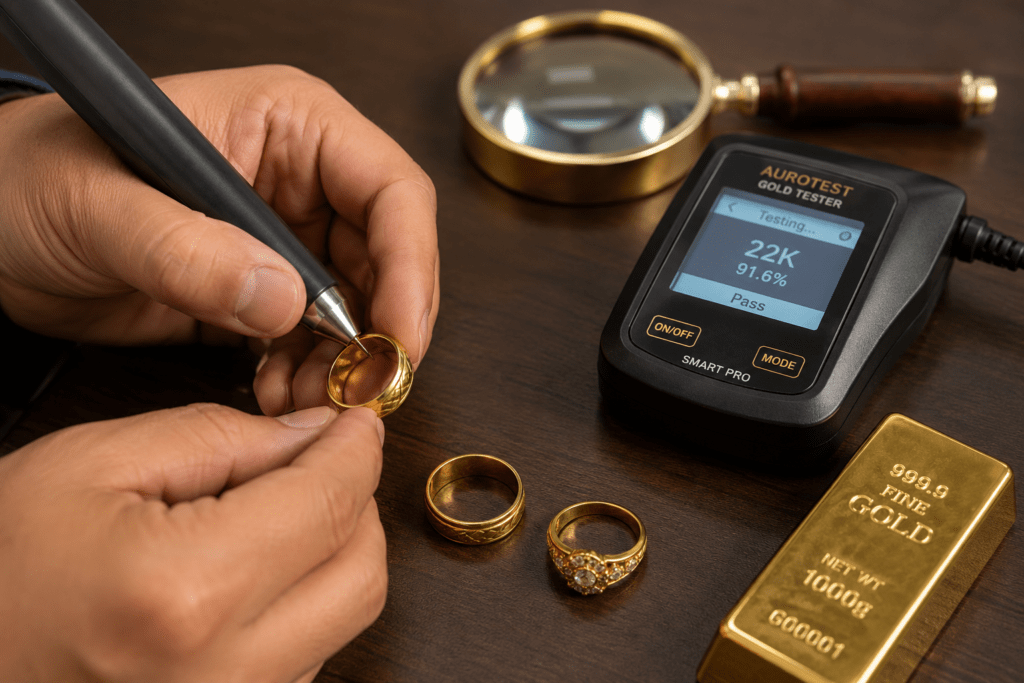
Many jewelers now use electronic testing devices that measure electrical conductivity to estimate purity without damaging the item. These handheld devices are fast and non-invasive, making them a popular choice for both buyers and sellers who want a quick, reasonably accurate reading.
X-Ray Fluorescence (XRF) Testing
XRF machines are considered one of the most accurate non-destructive testing methods available. The machine uses X-ray technology to analyze the metal composition of an item without scratching or damaging it in any way. Many reputable jewelers, pawn shops, and gold buyers use XRF analyzers, and the results typically appear within seconds. If you’re making a significant investment, ask the seller whether they offer XRF testing, or look for an independent appraiser who does.
Fire Assay Testing
This is the oldest and most accurate method for determining gold purity, often used by refineries and professional assayers. It involves melting the gold sample and separating it from other metals through a chemical process. While extremely accurate, it’s also destructive to the tested sample and typically reserved for larger quantities of gold, such as bars or bulk jewelry, rather than a single small item.
Tips for Beginners Buying Gold Safely
As a beginner, protecting yourself starts before you even test the gold. Here are some practical habits to build:
- Buy from licensed and reputable dealers. Established jewelers and certified gold dealers have a reputation to protect and are far less likely to sell counterfeit or mislabeled items.
- Always ask for a purity certificate or invoice. A proper receipt should state the karat, weight, and price paid, which is useful for resale or insurance purposes later.
- Compare prices with the current market rate. If gold is being offered at a price far below the standard market rate, treat it as a red flag rather than a bargain.
- Weigh the item on a certified scale. Purity checks matter, but so does accurate weight, since sellers sometimes manipulate both.
- Request third-party verification for large purchases. For coins, bars, or expensive jewelry, having an independent appraiser confirm purity adds an extra layer of security.
- Learn your local hallmarking standards. Different countries have different certification systems, so understanding what’s standard in your region helps you spot inconsistencies quickly.
Common Mistakes New Gold Buyers Make
Beginners often fall into a few predictable traps when purchasing gold for the first time. One common mistake is relying solely on a hallmark stamp without any additional verification, assuming that a stamped number guarantees authenticity. Another frequent error is skipping a physical inspection altogether when buying online, where photos can hide scratches, testing marks, or inconsistent coloring.
Some buyers also confuse gold-plated or gold-filled items with solid gold. Gold-plated items have only a thin layer of gold over a base metal, which wears off over time and is easily detected once that plating fades. Reading product descriptions carefully and asking direct questions about composition can prevent this costly confusion.
Finally, many first-time buyers skip getting a second opinion. Even experienced buyers occasionally have items tested by an independent jeweler before finalizing a big purchase. As a beginner, this extra step is even more valuable since you’re still building your own testing intuition.
Final Thoughts
Checking gold purity doesn’t have to be intimidating once you understand the basics. Start with a visual inspection of hallmarks, move on to simple at-home tests like the magnet, float, or vinegar test to rule out obvious fakes, and then confirm your findings through professional methods such as acid testing, electronic testers, or XRF analysis for significant purchases. Combining these approaches gives beginners a reliable, layered way to verify gold purity before spending their hard-earned money.
As you gain more experience, you’ll develop a natural sense for spotting inconsistencies in weight, color, and stamps. Until then, patience, research, and buying from trustworthy sources remain your best protection in the gold market.