
Gold has always held a special place as a financial safety net. Whether it’s wedding jewelry, an old family heirloom, or a gold coin bought purely as an investment, when money is tight, most people first think of selling their gold. The problem is that most people simply don’t know the right way to sell gold in order to get its full and fair value.
In this guide, we’ll walk you through the entire process step by step — what to look out for, what mistakes to avoid, and how to make sure you get the best possible price the market has to offer.
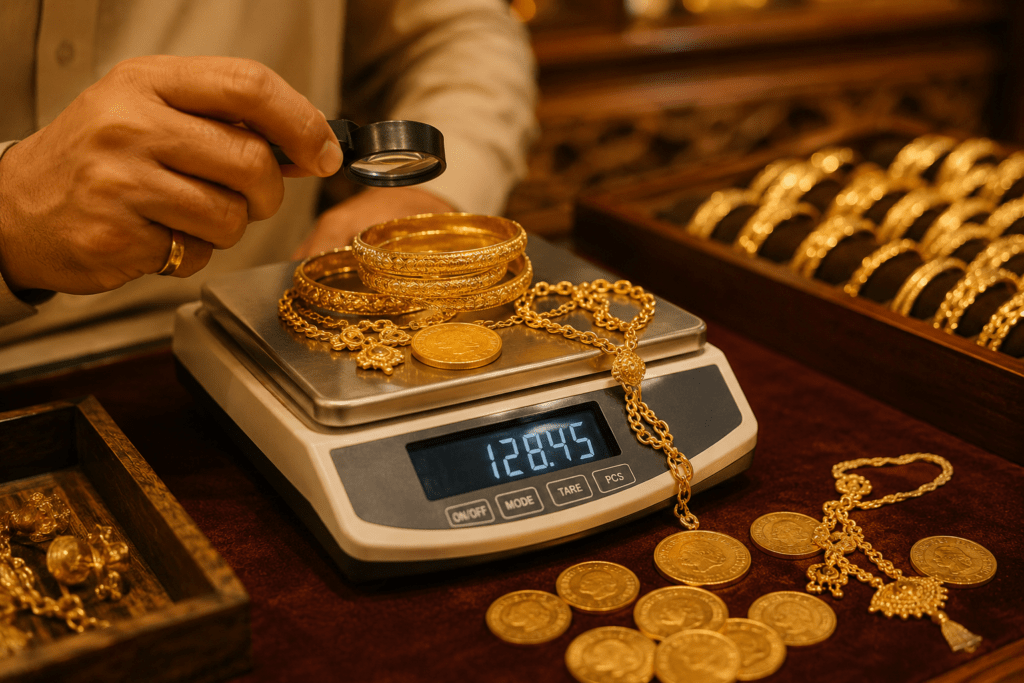
What You Need to Understand Before Selling Gold
The first thing to understand is that the value of gold isn’t based on weight alone. There are several other factors that determine the final price you’ll get:
1. Gold Purity (Karat) Gold typically comes in 24K, 22K, 18K, or 14K. 24K is the purest form, but because it’s very soft, it’s rarely used for everyday jewelry. Most jewelry people wear is 22K or 18K, mixed with other metals to make it more durable. The higher the karat, the higher the value.
2. Weight Gold weight is measured in grams or tola. Any buyer will weigh your gold on a digital scale. An important tip here: if your jewelry has stones, pearls, or other attachments, their weight is not counted as gold — so the final price may end up lower than you expect.
3. Current Market Rate Gold prices change daily, influenced by international markets, currency rates, and local demand. Always check the current rate before heading out to sell.
4. The Making Charges Gap When you originally bought your gold jewelry, you paid making charges on top of the raw gold price. But when you sell it back, buyers only pay for the raw gold value — making charges are non-refundable. This catches a lot of first-time sellers off guard when they see a lower price than they expected.
Step-by-Step Gold Selling Process
Step 1: Assess Your Gold Item at Home
Before you go anywhere, take a good look at what you’re selling. Does it have stones attached? Is it pure gold or a mixed-metal piece? If you still have the original purchase receipt, keep it handy — it makes it much easier to prove purity and builds trust with the buyer.
Step 2: Check the Current Gold Rate
Gold rates are published daily through news channels, financial websites, and local jewelers’ associations. Track the rate for 2–3 days before selling so you get a sense of whether prices are trending up or down. If prices are falling, it might be worth waiting a bit.
Step 3: Get Your Gold Tested
If you’re unsure about the purity of your gold, get it tested at a certified jeweler or assay office. Many markets now have electronic gold testing machines that give accurate purity readings within seconds. This step matters because if the buyer tests it themselves, they might underreport the purity to lower the price.
Step 4: Get Quotes From Multiple Buyers
This is the single most important — and most commonly ignored — tip. Never sell your gold at the first shop you visit. Get quotes from at least 3–4 different jewelers or gold buyers. Rates can vary significantly because each buyer has different margins and overhead costs.
Step 5: Negotiate
In most markets, negotiation is completely normal and expected. If you feel the offered price is too low, negotiate politely. Mentioning quotes from other buyers strengthens your position at the table.
Step 6: Confirm the Payment Method
Before finalizing the sale, clarify whether you’ll be paid in cash or via bank transfer. For larger amounts, a bank transfer is safer since it creates a proper transaction record.
Best Places to Sell Gold
Local Jewelers
This is the most traditional and common option. Local jewelers usually pay cash on the spot, but their margins tend to be higher since they’re buying for resale.
Gold Buying Companies
Many companies now specialize purely in buying gold. They often offer competitive rates due to higher volume, but be careful — some are not fully legitimate, so always check their reputation and reviews first.
Online Gold Buyers
Some platforms let you sell gold online by requesting a quote from home. It’s convenient, but carries more risk since you’ll need to ship the item.
Banks
Some banks offer buyback schemes for gold coins or bars, especially if you originally purchased them there. This is one of the safest options, but it’s usually limited to investment-grade gold, not jewelry.
Common Beginner Mistakes That Cost You Money
Mistake 1: Accepting the First Quote As mentioned earlier, settling for one shop’s offer is the biggest mistake beginners make. Margins vary widely between sellers.
Mistake 2: Selling Without Checking the Rate Many people sell gold without checking the day’s rate, and buyers take advantage by quoting outdated or lower rates.
Mistake 3: Making Emotional Decisions When gold is a family heirloom, emotional attachment often leads to rushed decisions. Always take your time and think it through.
Mistake 4: Skipping the Purity Check Selling without verifying purity can lead to significant financial loss, especially if the buyer underreports it.
Mistake 5: Expecting Making Charges Back Remember, resale value only covers raw gold — making charges are gone for good. Setting this expectation early avoids disappointment later.
How to Guarantee the Best Price
- Time It Right – Selling when gold rates are high naturally gets you a better deal. Rates tend to be more favorable during festive or wedding seasons due to increased demand.
- Sell in Bulk – If you have multiple items, selling them together often gets you a better overall deal than selling piece by piece.
- Choose Reputable Buyers – Always deal with established, trusted jewelers or companies.
- Keep Your Paperwork – Original receipts, certificates, or hallmark proof all strengthen your negotiating position.
- Follow Market Trends – Gold prices are tied to global economic factors. A little research on timing can make a real difference to your final payout.
Final Thoughts
Selling gold doesn’t have to be complicated as long as you go into the market well-informed. Getting your purity checked, collecting multiple quotes, staying updated on current rates, and choosing reputable buyers are simple steps that can consistently get you the best possible price. Avoid rushing into a decision — since gold holds real value, the choice to sell deserves careful thought.
If you’re a beginner, following this guide will help you sell your gold confidently, avoid unnecessary losses, and walk away with a fair, market-based price.